Silent Castle: Survive
Harvest Star GameStrategy
4.35.72K Reviews
- Version
- 1.51.000
- Installs
- 10.00M
- Age Rating
- Everyone
Screenshots
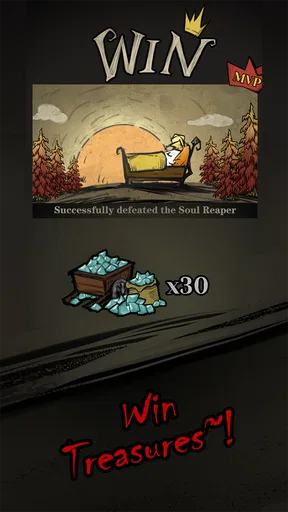
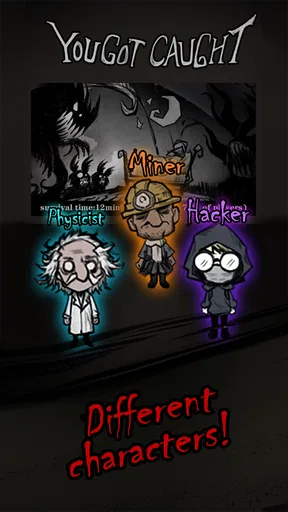
Our Review of Silent Castle: Survive
 Analysis by Appyee
I went into Silent Castle: Survive expecting a quick horror-themed strategy game, and that is exactly where it works best: short sessions built around making sensible choices while a threat steadily closes in. The castle setting gives each round a tense mood, but the real appeal is deciding what deserves attention first. I am not simply tapping through a story; I am trying to turn limited time and resources into enough protection to survive.
That makes it a good fit for Android players who enjoy compact defensive challenges rather than long, complicated strategy campaigns. It is free to play, rated for Everyone, and developed by Harvest Star Game. The game has reached over 10 million installs, with an average rating of 4.3 from around 274 thousand ratings, so it has clearly found an audience beyond the usual niche of horror strategy fans.
How a normal Silent Castle round feels
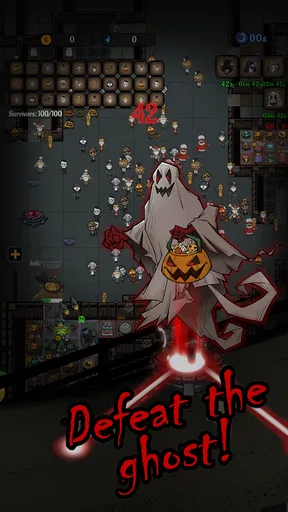
The basic workflow is easy to understand. I enter a castle, prepare for danger, and make decisions about how to use the available space and resources before the enemy becomes too difficult to handle. The store summary says to keep silent and fight the ghost, and that idea comes through in the way the game builds pressure. The atmosphere matters, but planning matters more than simply reacting to scary visuals.
My first useful habit was to stop treating every early action as equally important. At the beginning of a round, I look for the safest way to establish a stable position rather than spending everything immediately. A defensive game often tempts you to upgrade the first available option, but Silent Castle: Survive rewards a calmer approach. I prefer to create a dependable starting setup, then improve it in response to what the round is asking for.
This is also why the game feels more strategic than its simple premise suggests. The ghost is not just a decoration that appears between menus. Its presence gives every preparation choice a deadline. If I spend too long arranging minor improvements, I may be left without enough strength when the serious pressure starts. If I invest too aggressively, I can create a strong-looking setup that lacks balance.
A realistic use case is a short evening break when I want something more engaging than a passive puzzle but do not want to commit to a long campaign. One round gives me a clear objective and a reason to stay focused. I can also play in brief bursts, although the tension makes it easy to continue after a successful attempt because I immediately start thinking about how to handle the next one more efficiently.
What I check before making the first upgrade
I begin by identifying the part of the setup that keeps me alive for the longest, not necessarily the part that looks most powerful. This small change in mindset prevents waste. A defensive tool that buys time can be more valuable than a stronger option that arrives too late. I also pay attention to whether my current arrangement leaves me dependent on one single answer.
Another practical habit is to avoid making several unconnected improvements at once. When I change too many things together, it becomes difficult to tell which decision actually helped. I would rather make one meaningful adjustment, observe how the round develops, and then decide whether the next investment should reinforce that plan or cover its weakness.
The game is approachable because it does not require a long tutorial explanation before the central idea becomes clear. However, that simplicity can hide the difference between surviving casually and playing well. New players can enjoy the basic loop immediately, while experienced players will naturally start comparing routes, timing, and resource priorities from one attempt to the next.
Settings and small habits worth checking
I recommend checking the available settings before settling into regular play. I do not change options just for the sake of it; I look for anything that makes the controls, sound, or presentation more comfortable on my device. In a game built around tension, audio can affect how involved the experience feels, while a distracting presentation can make a short session less enjoyable.
It is also worth making sure the game feels comfortable in the way you hold your phone. Because the action and decisions are concentrated on a relatively small screen, accidental taps or rushed selections can be frustrating. I play more carefully when I am not trying to operate the game with one hand in an awkward position.
My most useful settings-related tip is to adjust the experience for the kind of session I am about to have. If I am playing in a quiet room, I can appreciate the atmosphere more. If I am playing during a commute or in a shared space, I prefer a less distracting setup and focus on the strategic rhythm instead of expecting the horror presentation to carry the whole experience.
Players should also remember that the game is free but includes optional in-app purchases ranging from $1.99 to $49.99 per item. I would approach those purchases as convenience choices rather than part of the basic reason to install the game. The free entry point is useful for deciding whether the loop suits you before spending anything.
Faster patterns that improve repeat attempts
The quickest improvement I found came from treating each failed round as a planning note instead of a simple loss. I ask where the setup stopped being flexible. Did I spend too much early? Did I leave a weak point untouched? Did I react to the ghost only after the situation was already dangerous? These questions produce better results than blindly repeating the same opening.
I also try to build repeatable opening habits. My first actions should be familiar enough that I do not waste attention on them, but not so rigid that I ignore the conditions of the round. This balance is important. A fixed routine creates speed, while a small amount of adaptation prevents the routine from becoming a liability.
One non-obvious trade-off is that a faster start is not always a stronger start. Moving quickly through early decisions can leave me with an impressive upgrade but no reliable way to support it later. I have had better results when I use the opening to create options. That means keeping enough flexibility to respond instead of spending every resource on the first attractive improvement.
Another useful pattern is to watch the timing of my decisions rather than only their final result. If I make a good choice too late, it may have no practical value. Silent Castle: Survive is at its most interesting when I plan one step ahead of the immediate danger. I want my next defensive action ready before the pressure forces me to make it.
For players who enjoy experimenting, I suggest changing one part of the approach between attempts. Try a more conservative opening, then a more aggressive one, and compare how each affects the middle of the round. This turns repetition into learning. It also helps reveal whether a loss came from a bad overall plan or from one poorly timed decision.
Where the strategy becomes less forgiving
The game’s accessible presentation should not be mistaken for unlimited depth. Silent Castle: Survive gives me a focused survival challenge, not the broad strategic sandbox of a large-scale strategy title. There is less room for elaborate long-term planning than I would expect from a full campaign game, and players looking for diplomacy, exploration, or a large technology tree should look elsewhere.
The horror theme can also create a mismatch in expectations. The castle and ghost provide atmosphere, but the lasting appeal comes from defense and resource decisions. If you want a story-heavy horror adventure with detailed character development, this is not the right choice. I would choose a narrative game instead. Here, the tension exists mainly to make each strategic mistake feel urgent.
There is also a learning curve hidden inside the straightforward controls. A casual player can understand what to do, but strong results require paying attention to timing and balance. That may be frustrating for someone who wants an entirely relaxed experience. The game is most enjoyable when I accept that some attempts are experiments and that improvement comes from recognizing patterns.
Because the game is designed around repeated survival attempts, repetition will be part of the experience. I see that as a strength when I am in the mood to refine a plan, but it can become tiring if I want constant novelty. The best session length depends on my patience. After several attempts, I prefer to take a break rather than continue making rushed decisions and blaming the game for mistakes caused by fatigue.
Version 1.51.000 is the current version, and the game runs on Android 8.0 or later. That makes it accessible to many Android users, although the actual comfort of play will still depend on the phone’s screen, performance, and battery condition. I would check those basics before starting a long session, especially because a strategy game becomes much less enjoyable when controls feel delayed or the device is struggling.
Who should play it, and who should skip it
I would recommend it to someone who likes defensive strategy with a spooky setting, short repeatable sessions, and decisions that become more meaningful under pressure. It is particularly suitable for players who enjoy improving through trial and error. You do not need to be an expert in strategy games to start, but you should be willing to learn from failed attempts instead of expecting every round to be won immediately.
It is also a good option for a player who wants something more active than a basic idle game. The game asks me to stay involved, prioritize improvements, and notice when the situation is changing. That makes it a better fit for focused breaks than for moments when I only want background entertainment.
I would skip it if your priority is a deep, story-led horror experience, a competitive strategy game with extensive multiplayer systems, or a large world to explore. I would also avoid it if repeated attempts feel like unnecessary grinding to you. Its appeal depends on enjoying the process of refining a survival plan, not just reaching a conclusion once.
The Everyone age rating makes it approachable for a broad audience, but the atmosphere may still feel tense for younger or more sensitive players. The presentation is built around a ghost and a threatened castle, so I would consider the individual player’s comfort with spooky themes rather than relying only on the age label.
How it compares with familiar strategy alternatives
Compared with traditional tower defense games, Silent Castle: Survive feels more personal and immediate. Instead of watching a broad battlefield from a distance, I feel tied to the survival of a particular position. That narrower viewpoint creates tension, but it also means there is less room for the sprawling map control and elaborate lane planning found in larger tower defense titles.
Compared with idle defense games, it demands more attention. I cannot simply leave the game running and expect the same satisfaction. My choices matter because timing and prioritization shape the outcome. On the other hand, players who want a very deep economy system may find the experience lighter than a management-focused strategy game.
Compared with horror games, it places strategy ahead of storytelling. I get the mood of a haunted castle, but the main question is how to survive the next threat rather than what happened to the characters or how the mystery will unfold. That makes it easier to play in short sessions, though less satisfying for anyone seeking a cinematic narrative.
In my view, its strongest position is between casual defense and tense horror. It is more involved than a simple time-killer, but less demanding than a major strategy production. That middle ground is useful, provided you understand that the game’s depth comes from repeated decision-making rather than a huge number of systems.
My approach to getting better without overcomplicating it
I keep a simple mental record after difficult attempts: what I upgraded first, when the pressure became serious, and which weakness caused the collapse. I do not need a spreadsheet for this game. Remembering one clear lesson per attempt is enough to make the next round more deliberate.
I also avoid changing my whole plan after one unlucky result. A single loss does not prove that every part of the strategy was wrong. I test the smallest adjustment that addresses the obvious weakness. This is a useful discipline in any repeatable strategy game, but it feels especially effective here because the rounds are compact enough to compare.
When I am playing casually, I focus on survival and atmosphere. When I am playing seriously, I focus on efficiency: fewer wasted actions, earlier preparation, and a setup that can withstand more than one kind of pressure. Separating those two modes keeps the game enjoyable. I do not need to optimize every session, and I do not need to play casually when I am trying to improve.
The biggest advanced limitation is that mastery eventually depends on how much variety the available challenge provides. Once I understand the main rhythm, the question becomes whether I still enjoy refining small decisions. For me, that is enough for regular short sessions, but players who need constant new mechanics may reach the end of its appeal sooner.
My final verdict after settling into the castle
Silent Castle: Survive is a focused strategy game with a clear identity. Harvest Star Game combines a haunted setting with defensive decision-making, and the result is easy to start but more demanding to play well than the simple premise suggests. I like that the game gives my short sessions a purpose: establish a plan, respond to pressure, learn from the outcome, and try again.
Its free price makes trying it straightforward, while the optional purchases mean I can decide for myself whether the basic experience is enough before considering extra spending. The current version, 1.51.000, supports Android 8.0 or later, and the Everyone rating makes it broadly accessible, with the usual caveat that spooky themes are not ideal for every player.
My recommendation is strongest for players who enjoy repeatable survival strategy rather than story-heavy horror. I would install it for a commute, a short evening break, or any time I wanted a compact game that rewards attention without demanding a long campaign. I would not choose it as a replacement for a full tower defense, a narrative horror adventure, or a complex strategy simulator.
After several rounds, my opinion is positive but measured. The castle setting gives the game personality, and the pressure of the ghost makes ordinary upgrades feel important. Its limits are just as clear: repetition, a narrower strategic scope, and less narrative depth than some alternatives. If those boundaries match what you want, this is an enjoyable little survival challenge that becomes more satisfying as your habits improve.
Verdict
Strengths of Silent Castle: Survive
- Simple controls make it easy to start playing immediately.
- Short matches fit well into quick gaming sessions.
- Multiple roles create variety between different rounds.
- Defensive planning gives each match a satisfying strategy layer.
- The dark atmosphere suits fans of tense survival gameplay.
Limitations of Silent Castle: Survive
- Random events can make some matches feel unfair.
- Progress may become repetitive after extended play.
- Limited communication can make team coordination difficult.
- Some upgrades take considerable time to unlock.
- Ads or optional purchases may interrupt the overall experience.
Other Releases by Harvest Star Game
View All
Forest Cabin: Survive
Strategy4.6
Similar Picks in This Category
View All
Clash of Clans
Supercell4.5

Plants vs. Zombies™
ELECTRONIC ARTS3.7

Lords Mobile: Kingdom Wars
IGG.COM4.5

Clash Royale
Supercell4.4

State.io — Conquer the World
CASUAL AZUR GAMES4.1

Car Driving School : Car Games
Spark Game Studios3.9
Frequently Asked Questions
What is Silent Castle: Survive about?
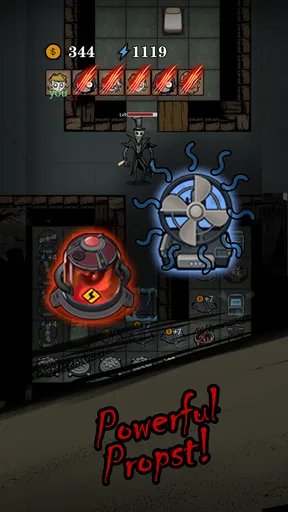
Silent Castle: Survive is a horror-themed survival strategy game in which you must hide inside a room, build defenses, and generate resources while trying to withstand attacks from terrifying enemies. The main challenge is balancing limited energy and coins between upgrading your bed, strengthening doors, installing defensive weapons, and surviving until the match ends.
How do you play Silent Castle: Survive?
At the beginning of a round, you choose an available room and quickly interact with the bed to start producing resources. You then use those resources to improve the room, repair the door, and purchase defensive devices. Remaining quiet and managing upgrades carefully is important, because enemies become increasingly dangerous and wasting resources early can leave you vulnerable later.
Can Silent Castle: Survive be played offline?
Some versions or modes may allow limited play without a constant internet connection, but the exact offline functionality can depend on the device, game version, advertisements, and online services. Features such as updates, account synchronization, leaderboards, or certain events may require internet access. It is best to check the store description and permissions before downloading.
Is Silent Castle: Survive free to download?
Silent Castle: Survive is generally available as a free download, although the game may include advertisements and optional in-app purchases. You can usually progress without paying, but purchases may provide extra resources, remove ads, or speed up certain parts of the experience. Parents should review purchase settings if children will be playing on the device.
Is Silent Castle: Survive suitable for children?
The game uses frightening imagery, suspenseful sound effects, monsters, and scenes designed to create tension, so it may not be suitable for very young children or players who are sensitive to horror. Although the gameplay is presented in a stylized way, families should check the official age rating, advertising content, and in-app purchase options before allowing children to install it.
Play our best games!


